You are viewing the Helena, MT location.


When wildfire smoke rolls in, keeping your home’s air clean becomes a serious concern. Homeowners focused on indoor air quality in Helena, MT often weigh two main options: installing a whole-house air purifier or upgrading to a high-MERV HVAC filter. Both approaches can help reduce smoke particles indoors, but they work differently and come with their own pros and cons.
Upgrading to a High-MERV HVAC Filter
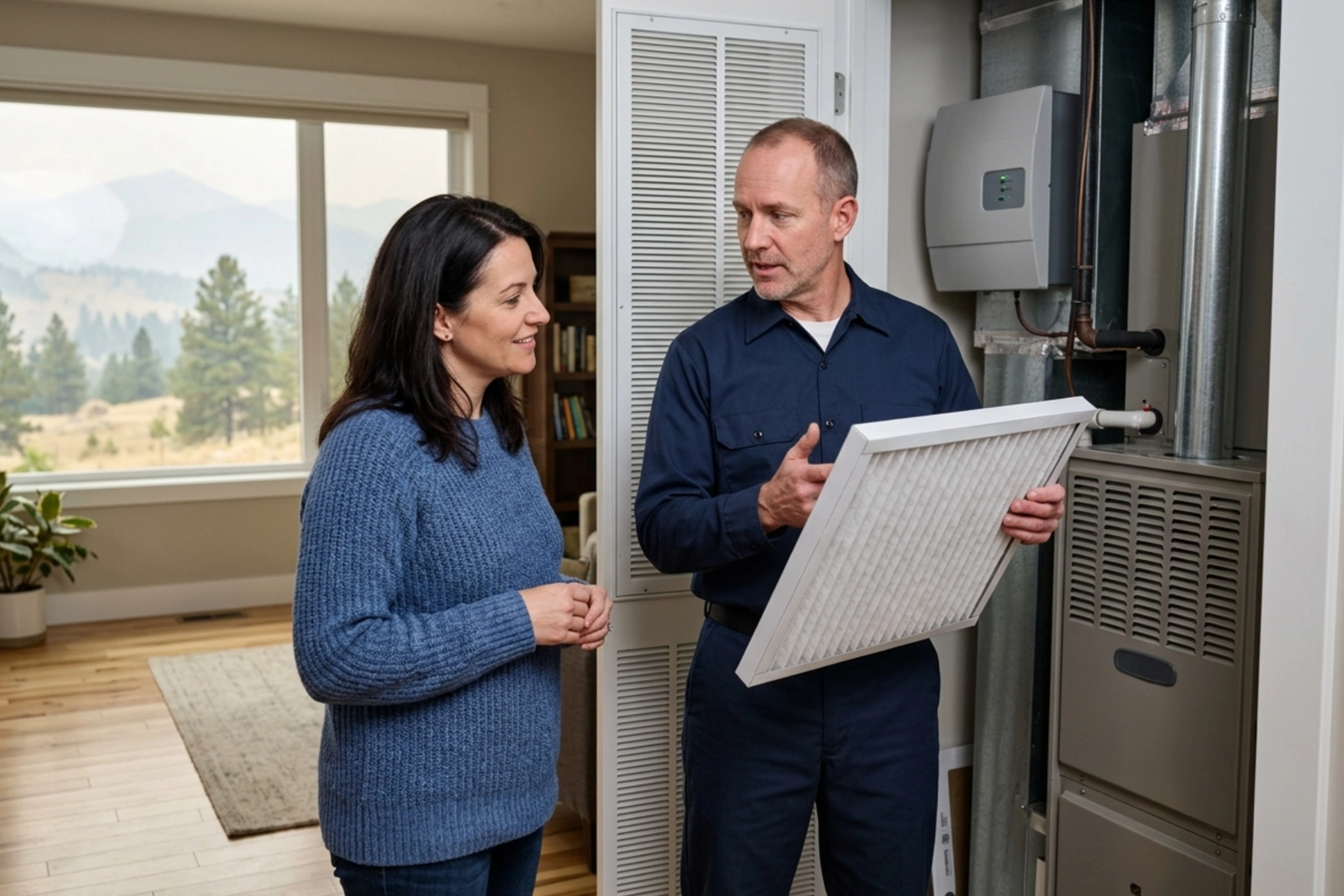
Filters with higher MERV ratings—typically MERV 11 to MERV 16—are designed to capture smaller particles, including smoke, dust, and pollen. Because these filters are installed directly in your HVAC system, they provide whole-home coverage whenever your system is running.
The main advantage here is convenience and cost-effectiveness. Upgrading your filter is relatively inexpensive and doesn’t require major modifications to your system. It’s an easy first step for homeowners looking to improve air quality during smoke season.
However, there are limitations. High-MERV filters are denser, which can restrict airflow if your HVAC system isn’t designed to handle them. This added strain can reduce efficiency and even lead to system wear over time. In some cases, homeowners may not see enough smoke reduction, especially during heavy smoke events.
Whole-House Air Purifiers Explained
Whole-house air purifiers take filtration a step further. These systems are integrated into your HVAC system and can use advanced technologies like high-efficiency media filters, UV lights, or electronic air cleaners to capture and neutralize airborne contaminants.
The biggest benefit of a whole-house purifier is its enhanced performance and ability to remove biological contaminants like viruses and bacteria. These systems are specifically designed to improve air quality across your entire home, often capturing much finer particles than standard filters alone. During smoke season, this can make a noticeable difference in comfort and health.
On the downside, whole-house air purifiers require a higher upfront investment and professional installation. They also specialize in smaller, biological contaminants rather than swathes of wildfire smoke and other inorganic contaminants.
Comparing the Two Options
When it comes to smoke, both solutions can play a role. For some homeowners, a high-MERV filter is enough to handle mild smoke conditions. For others—especially those with respiratory sensitivities or frequent exposure to heavy smoke—a whole-house air purifier may be the better choice. In many cases, a combination of both delivers the best results.
Why Professional Guidance Matters
Not every HVAC system can support a high-MERV filter, and not every home requires a whole-house purifier. Choosing the wrong option can lead to poor performance, unnecessary expenses, or even damage to your system.
That’s why it’s important to work with an experienced HVAC professional. Our team can evaluate your system, assess your air quality concerns, and recommend a solution that balances performance, efficiency, and cost.
Let’s Improve Your Air Quality Together
Reach out to us today to schedule a consultation and take the next step toward cleaner, healthier indoor air.
Contact Ambient Air Solutions today for expert help with all your HVAC and plumbing needs, including indoor air quality in Helena, MT. Simplifying Heating & Cooling!